The first year of your baby’s life is filled with incredible changes. From tiny movements and first smiles to babbling and taking early steps, babies grow at an astonishing pace. These changes, known as developmental milestones, serve as helpful markers of progress in areas such as movement, communication, cognition, and social interaction.
However, it’s important to remember that every baby develops at their own pace. Milestones offer general guidance rather than fixed deadlines. Some children may reach certain stages earlier or later than others, and that’s perfectly normal. If you do have concerns about your baby’s development, don’t hesitate to speak with your health visitor or GP.
What Are Developmental Milestones?
Developmental milestones are skills and behaviours that most children begin to show within a specific age range. They are usually grouped into four key areas: physical (gross and fine motor skills), communication and language, cognitive (thinking and problem-solving), and social/emotional development.
Milestones provide a valuable way for parents and childcare professionals to monitor a child’s progress and spot any potential delays early on. Early identification allows for timely support and intervention, which can make a significant difference.
Month-by-Month Milestones
0–3 Months
In the earliest months, babies begin to develop head control and show early signs of social connection. Most babies will start lifting their head during tummy time, begin to coo or make vowel-like sounds, and start smiling in response to familiar faces and voices. They will become more alert and enjoy looking at faces, especially those of parents and carers.
4–6 Months
At this stage, babies become more physically active. They may roll over, begin to sit with support, and reach for and grasp toys. They enjoy interaction and often laugh in response to playful gestures. Babbling begins to emerge, often with repetitive sounds such as “ba” or “da”. Their hand-eye coordination also begins to improve.
7–9 Months
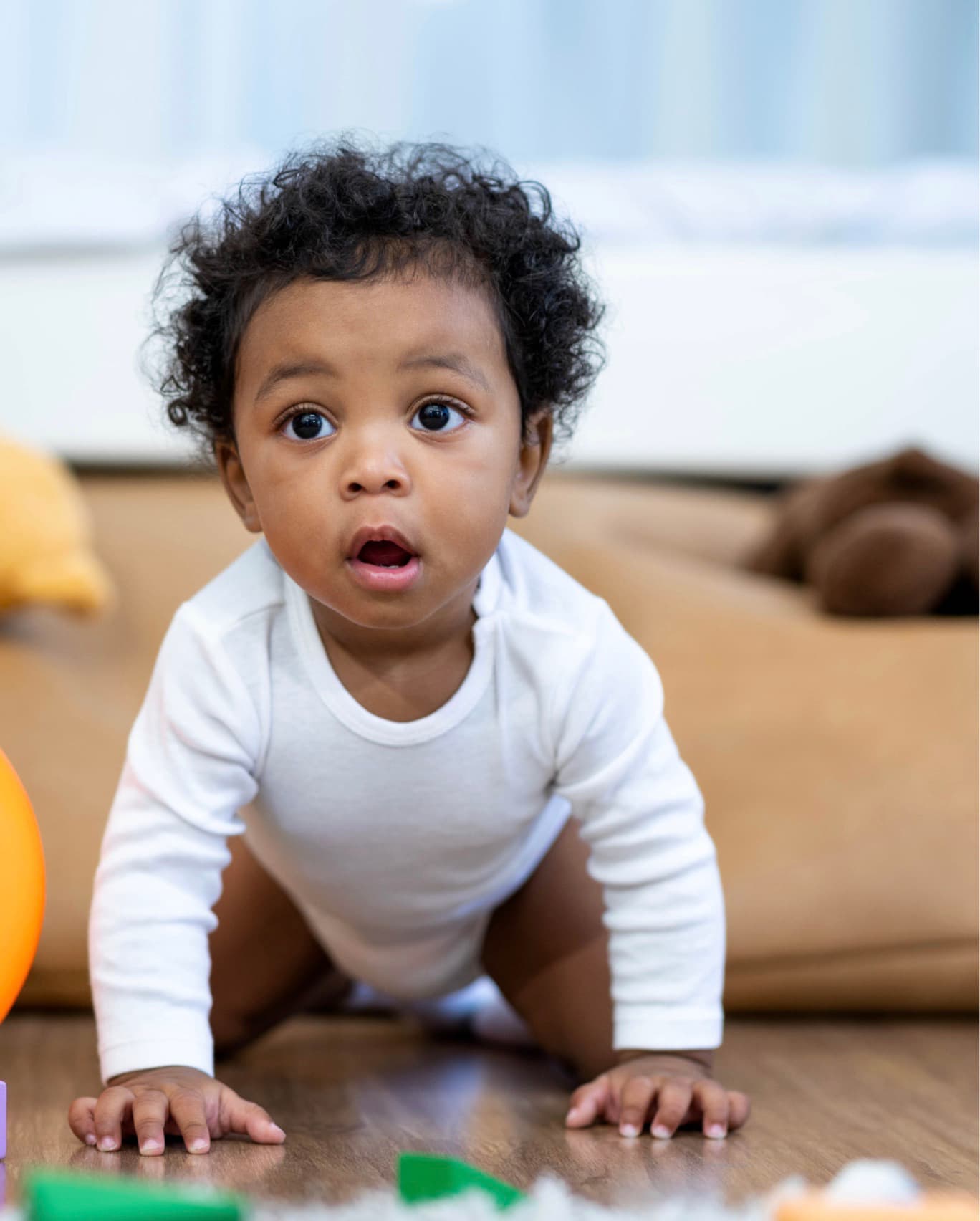
By now, babies are more mobile, some may begin crawling or attempting to pull themselves up to stand. They develop the ability to sit unsupported and may start using a pincer grip (thumb and finger) to pick up small items. Socially, babies may show signs of shyness with unfamiliar people and become attached to familiar routines. Communication improves as they begin to understand simple words or actions.
10–12 Months
In the final months of the first year, many babies begin to stand and may take their first independent steps. First words like “mama” or “dada” often appear, and they begin using gestures such as pointing or waving. They become more interactive during play, imitating adults and showing curiosity about how things work.
Important Facts for Parents
By the age of three, around 80% of a child’s brain development has already taken place, making the early years particularly important for learning and stimulation. Activities like tummy time are not just beneficial, they’re essential. Daily supervised tummy time helps build the neck, back and shoulder strength needed for crawling and sitting.
Baby sign language is another useful tool for early communication. Simple gestures such as waving, pointing, or signalling “more” or “milk” can help babies express themselves before they can speak, reducing frustration and encouraging interaction.
While milestone checklists are helpful, it’s equally important to enjoy the journey without becoming too focused on comparisons. If your baby hasn’t reached a certain milestone exactly on time, it’s not necessarily a cause for concern. However, if your baby is missing multiple milestones or if you have concerns about their responsiveness or development, speak to a healthcare professional for guidance.
How Parents Can Support Growth
* Offer plenty of tummy time from birth to help strengthen core muscles.
* Talk to your baby throughout the day using simple, clear language.
* Sing songs and read books together to promote language and listening skills.
* Provide toys and objects that encourage reaching, grasping and exploring.
* Use mirrors and sensory materials to stimulate curiosity.
* Create a safe, predictable routine with time for cuddles and quiet bonding.
* Respond to your baby’s sounds and gestures to encourage two-way communication.
* Let your baby play and explore freely in a secure space.
How Little Angels Nursery Supports Your Baby’s Development
At Little Angels, we believe in nurturing every child’s development through thoughtful care and engaging activities. Our experienced practitioners plan age-appropriate experiences to support physical, cognitive and emotional growth. We observe and track each baby’s progress and share regular updates with families.
Our nursery environment is designed to promote curiosity and comfort, giving babies the space and support they need to explore the world around them safely. We also work closely with parents to offer guidance and reassurance as their child develops.
Final Thoughts
Your baby’s first year is a time of remarkable transformation. While developmental milestones provide helpful guidance, it’s love, connection, and interaction that make the greatest impact. Cherish every moment, whether it’s a giggle, a babble or a wobbly first step. And know that at Little Angels, we’re here to walk alongside your family every step of the way.