Following Covid, we know that many parents are concerned about the impact that lockdown had on their children’s socialisation. For many children, nursery is the first time that they develop relationships outside of their families and our team work to support each child’s social development.
At Alpha Kindergarten Fletton, there are five ways we help your child’s social development:
- We help children to understand boundaries and appropriate behaviour
For many children, nursery is the first time that they will interact with a significant number of other children. As they do this, we support their interaction to help them understand what behaviour is appropriate when socialising with their peers.
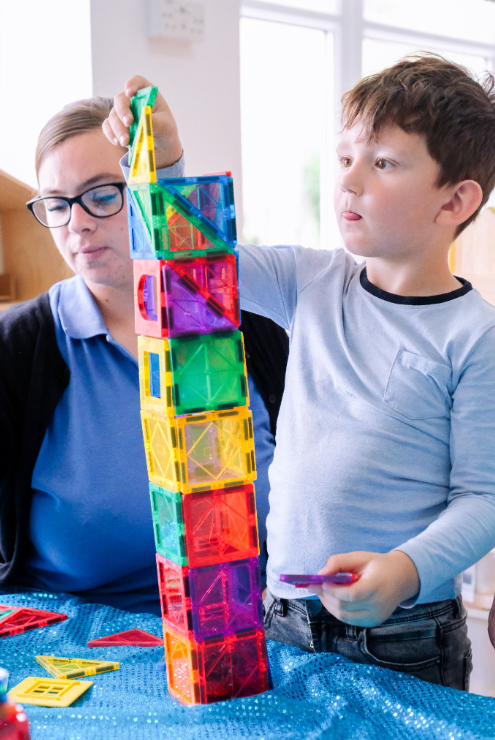
We always believe in learning through play, so your child will take part in games and activities that promote turn taking and sharing. This will help your child to develop clear expectations about what is expected when engaging with others. For example, even a simple game passing a ball to each other helps children to learn behavioural concepts such as waiting your turn and sharing the ball.
Throughout the day, our team will also help to role model behaviour for children. This could include saying ‘please’ and ‘thank you’ when passing something to the child. Or during meal times, adults will role model manner to each other and the children sat at the table.
- Children are supported in forming positive relationships with others
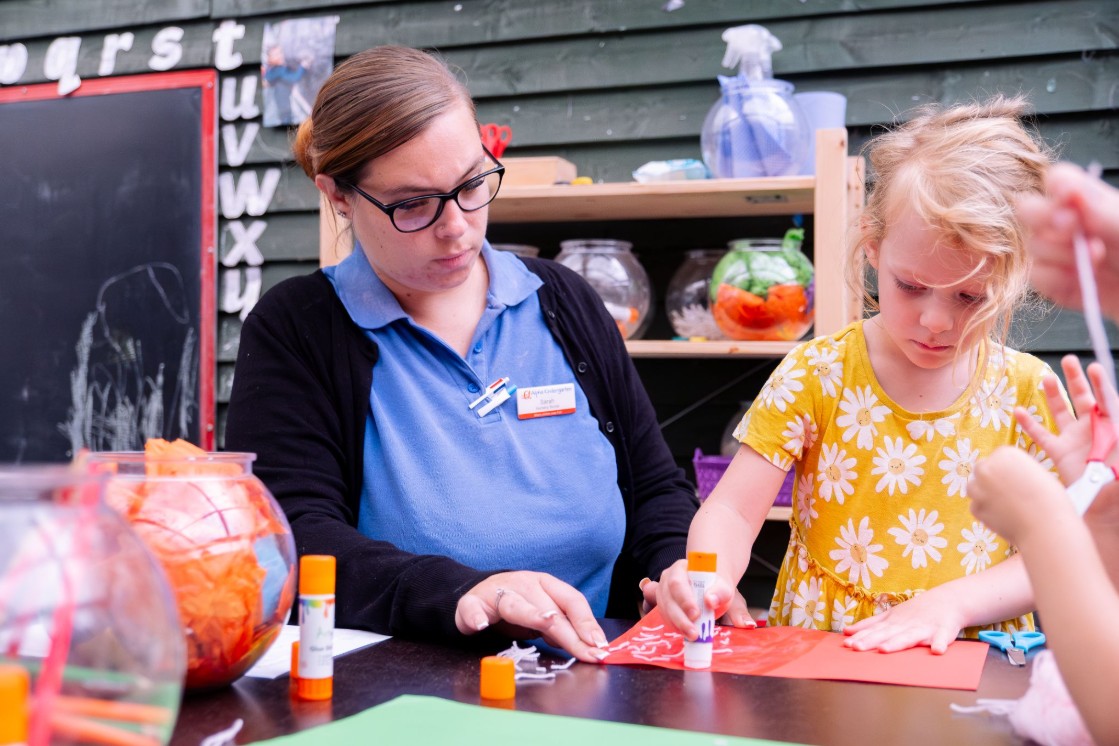
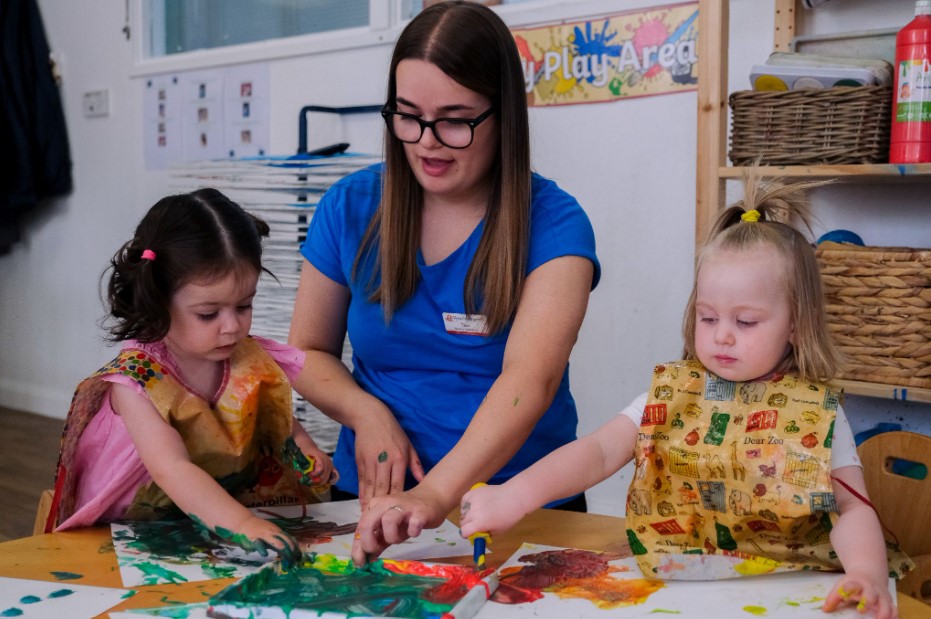
At nursery, we help children to build relationships with others in ways they weren’t previously equipped to do so. Your child will have a key person – a member of staff who will develop a relationship with them. Not only does this ensure that they have a secure relationship with someone in the nursery early on, it also means that they have someone who can demonstrate what is expected in social interactions such as saying please and thank you.
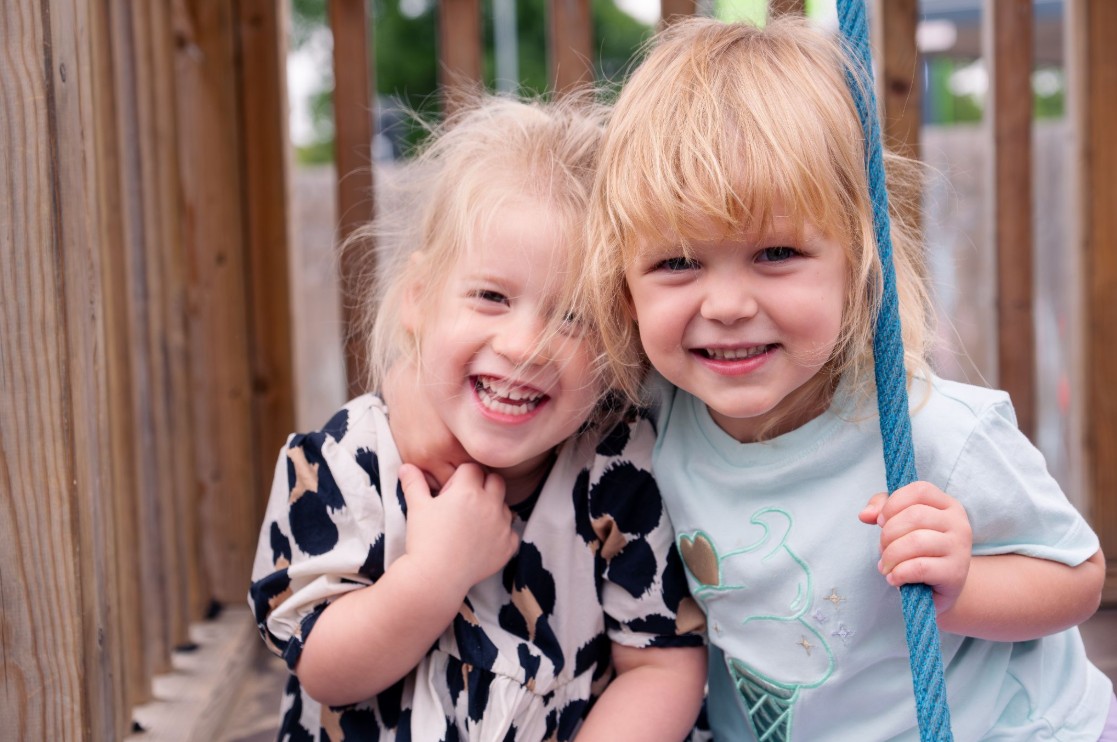
As they start to develop relationships with their peers, we know that it doesn’t always go smoothly. So, we support children to resolve their differences positively. By sharing experiences together, sharing interests and engaging in team work through games and activities, your child will develop the confidence to build positive relationships with others.
- We help your child to manage their feelings
In the years before school, children need support to manage their feelings as their brains start to receive a large amount of information – including emotion and memories. Our team are qualified to support them in processing all of this in a way which helps them to manage their feelings.
As well as ensuring that we are always there for them, we support this by consistently role modelling behaviour to help them better understand emotions. For example, we will do fun activities which role model situations involving emotion such as looking after a doll and making sure that the doll is happy.
- Building your child’s confidence
During your child’s time at nursery, we support them as they develop self-confidence and self-awareness. In babies and younger children, songs such as ‘head, shoulders, knees and toes’ helps your child develop a feeling of self.
With older children, we help them to understand that their interactions have positive consequences, which helps them to build the confidence to do that thing again in the future. At meal times, for example, they will help to set the table, pour drinks for each other and have a meal together to help them understand the positive consequences of helping their friends.
- We develop your child’s listening skills
We know how difficult it can sometimes feel to get your child to listen! At nursery we encourage children to listen to their peers and adults and support them to process what they’ve heard. Our staff are trained and experienced in adapting to each child as an individual and environment so that they can support children to listen in different situations.
This encourages listening to others and supports their ability to understand and follow instructions. This can help to ease the transition between nursery and primary school and parents often mention that their children find it easier to follow instructions at home.